How to Identify and Fix Dead Internal Links in WordPress
To identify and fix dead internal links in WordPress, start by conducting a link audit using tools like the Broken Link Checker or Ahrefs to detect broken links. Once identified, update or remove these links—test them afterward to guarantee they’re functional. For better management, use redirect plugins to guide users to relevant content. Consistent monitoring is essential, and regular audits will sustain your site’s usability and SEO performance. Discover further strategies to enhance your link management practices.
Understanding Dead Internal Links
Although links are vital for traversing your WordPress site, dead internal links can hinder user experience and SEO performance. Understanding dead internal links involves recognizing how link decay occurs over time, ultimately affecting website navigation. As you create content, it’s important to maintain an awareness of your internal links; they can become outdated or lead to non-existent pages due to various reasons such as content removal or URL changes.
When users encounter a dead link, their journey through your site is interrupted, leading to frustration and potential abandonment. This not only impacts their experience but can also result in search engines penalizing your site for poor navigation. Regularly auditing your links is a proactive approach to combat link decay. By identifying and correcting these dead links, you guarantee a seamless navigation experience for your audience, preserving the freedom of exploration that a well-structured site provides.
The Impact of Dead Links on User Experience
Dead internal links can considerably disrupt user experience, leading to frustration and confusion. When visitors encounter dead links, it negatively impacts their journey across your website. Here are four key effects to evaluate:
Dead internal links significantly hinder user experience, causing frustration and confusion during site navigation.
- Increased Bounce Rates: Users are likely to leave if they can’t access desired content, harming visitor retention.
- Reduced User Engagement: Frustration from dead links limits interaction with your site, affecting overall user engagement.
- Decreased Navigation Efficiency: A lack of functional links complicates website navigation, hindering content accessibility and discovery.
- Damaged Trustworthiness Perception: Frequent dead links erode your site’s credibility, diminishing users’ trust in your brand.
To maintain a seamless user experience, it’s critical to regularly monitor and fix dead links. This guarantees smooth navigation and enhances your site’s overall effectiveness in delivering valuable content.
The Importance of SEO in Link Management
When managing links on your website, understanding the role of SEO is essential for maintaining both user experience and search engine visibility. Effective link management directly impacts your SEO strategies, as search engines assess your site’s credibility based on the quality and functionality of links. Dead internal links can lead to higher bounce rates, which signals to search engines that your content may not be trustworthy.
Performing regular link evaluation helps you identify broken links and guarantees that your site remains a reliable resource. By fixing these links, you not only enhance user satisfaction but also strengthen your site’s SEO performance. A well-structured internal linking strategy can improve crawlability, allowing search engines to index your content more efficiently. Ultimately, prioritizing SEO in your link management will foster a more engaging user experience while boosting your site’s visibility in search results, granting you the freedom to reach a wider audience.
Tools for Identifying Dead Internal Links
To effectively identify dead internal links in WordPress, you have several options at your disposal. Popular link checker plugins can automate the detection process, saving you time and effort. Alternatively, manual link verification methods allow for a more granular review, ensuring that you catch every broken link.
Popular Link Checker Plugins
While maintaining a WordPress site, you’ll want to guarantee all internal links function properly, and using a link checker plugin can greatly simplify this task. These tools offer various link checker features that help you identify dead links efficiently. Here’s a list of popular plugins you might consider:
- Broken Link Checker – Monitors your content for broken links and missing images.
- Ahrefs – Provides thorough site audits and link comparisons.
- WP Link Status – Offers real-time link status updates directly within your dashboard.
- Link Checker – Scans your site for broken links and generates reports.
When evaluating these options, plugin comparisons can help you choose the best fit for your specific needs, ensuring your site remains user-friendly and functional.
Manual Link Verification Methods
Verifying internal links manually can be a meticulous but necessary task for maintaining your WordPress site’s integrity. Start by systematically navigating through your pages and posts, clicking each link to guarantee it leads to the intended destination. Document any broken links you encounter; this is essential for effective link verification. Additionally, utilize your browser’s developer tools to check for 404 errors on internal links. Manual techniques like this allow you to assess not only the functionality of links but also their relevancy. As you perform these checks, consider cross-referencing with your site’s sitemap to confirm thorough coverage. This hands-on approach not only enhances site performance but also empowers you to maintain control over your digital space.
Manual Methods to Find Dead Links
When you’re looking to identify dead internal links manually, browser extensions can be a valuable asset. Additionally, checking your WordPress dashboard allows you to spot broken links directly within the platform. Both methods provide a straightforward approach to maintaining link integrity on your site.
Use Browser Extensions
To effectively identify dead internal links on your WordPress site, employing browser extensions can be a practical solution. These browser tools simplify link analysis, allowing you to pinpoint issues quickly. Here are some popular extensions you might consider:
- Check My Links: This tool crawls your pages and highlights dead links instantly.
- Broken Link Checker: It scans your site for broken links and provides a detailed report.
- LinkMiner: Besides identifying dead links, it offers insights into link metrics.
- SEOquake: This extension analyzes your links and provides essential SEO information.
Using these extensions not only saves time but enhances your site’s overall health, ensuring a seamless experience for your visitors.
Check WordPress Dashboard
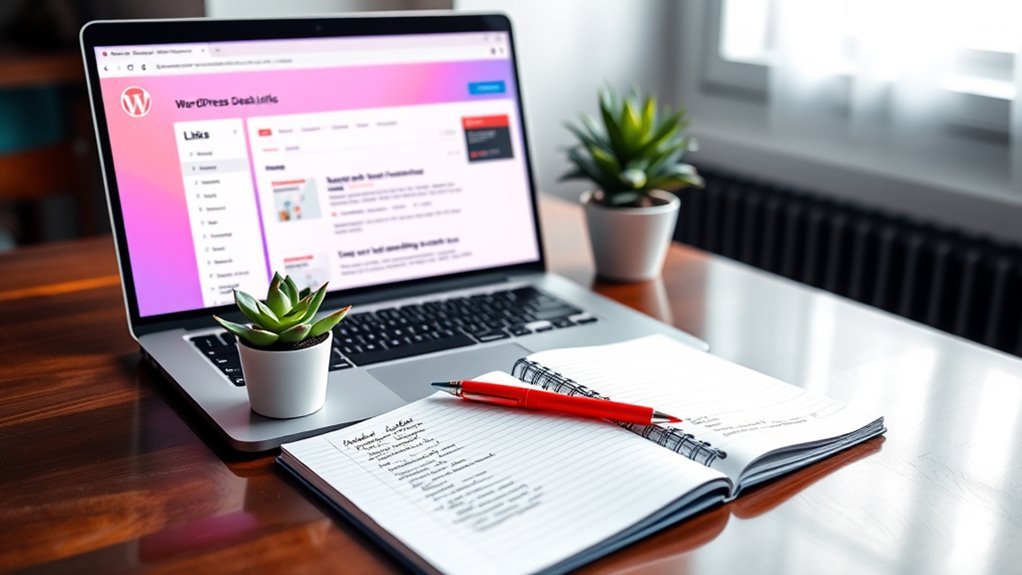
One effective method to find dead internal links is by utilizing your WordPress dashboard, which provides a straightforward way to monitor and manage your site’s links. Start with dashboard navigation to access the Pages or Posts section, where you can check for broken links manually. Look for any error messages or warnings that indicate a link is not functioning properly. Additionally, consider using the “Edit” feature to inspect each link’s URL. If you encounter a dead link, you can quickly remove or replace it directly from this interface. Regularly performing this check not only enhances user experience but also supports your site’s SEO, ensuring that your visitors enjoy seamless navigation.
How to Fix Dead Internal Links
Although dead internal links can hinder user experience and search engine optimization, fixing them is a straightforward process. You can tackle this issue effectively by following these steps for broken link fixing:
Dead internal links can negatively impact user experience and SEO, but addressing them is a simple process.
- Conduct a Link Audit: Use plugins or tools to identify all internal links on your site.
- Categorize Broken Links: Classify them based on the type of error (404, redirect issues, etc.) to prioritize fixes.
- Update or Remove Links: For each broken link, either update the URL to a correct one or remove it if it’s no longer relevant.
- Test Changes: After making adjustments, revisit your site to verify that all links work correctly.
Redirecting Dead Links to Relevant Pages
Redirecting dead links to relevant pages is essential for maintaining user experience and preserving SEO value. You’ll need to utilize specific tools for effective redirect management, ensuring the new pages align with the original content’s intent. Implementing best practices will not only streamline this process but also enhance site navigation and retention.
Importance of Relevant Redirects
When a dead internal link is encountered, it’s crucial to implement relevant redirects that guide users to pertinent pages instead of generic ones. This practice not only enhances user engagement but also strengthens your SEO strategy and maintains the integrity of your link hierarchy. Here are four reasons to prioritize relevant redirects:
- User Experience: Redirects lead users to relevant content, reducing frustration.
- SEO Benefits: Relevant redirects preserve link equity and improve search rankings.
- Content Relevance: They guarantee users find similar information, keeping them engaged.
- Link Hierarchy Maintenance: Redirects help maintain the logical structure of your website, improving navigation.
Tools for Redirect Management
Managing redirects effectively is essential for any WordPress site, especially when dealing with dead internal links. To streamline this process, utilizing redirect management tools can save you time and enhance your site’s usability. These tools allow you to create, monitor, and manage redirects seamlessly, ensuring users find the content they need without encountering errors.
Additionally, link tracking software is invaluable for analyzing traffic patterns and identifying which redirects are performing well and which need adjustment. By combining these technologies, you can maintain the integrity of your site, improve SEO, and enhance user experience. Remember, efficient redirect management isn’t just about fixing links; it’s about maintaining a fluid and accessible web presence that reflects your brand’s commitment to quality.
Best Practices for Redirecting
Although dead internal links can frustrate users and harm your site’s SEO, redirecting them to relevant pages is a strategic way to maintain engagement and enhance user experience. To effectively implement redirect strategies, consider the following best practices:
- Link Prioritization: Focus on high-traffic pages first to maximize impact.
- Relevance: Guarantee the destination page closely relates to the original content.
- Type of Redirect: Use 301 redirects for permanent changes to signal search engines.
- Regular Audits: Periodically review redirects to maintain their effectiveness and relevance.
Using Plugins for Continuous Monitoring
To maintain an ideal user experience on your WordPress site, implementing plugins for continuous monitoring of internal links is essential. These plugins offer various features that help you track link performance effectively. Consider the monitoring frequency you prefer; some plugins allow real-time checks, while others operate on scheduled intervals. Customize your alert settings to receive notifications based on your needs, ensuring you’re promptly informed of any dead links.
User permissions can be configured, allowing specific team members to manage and monitor links without compromising site security. Additionally, evaluate integration options with your existing tools to streamline your workflow. When reviewing plugins, conduct thorough comparisons to identify those with minimal performance impact on your site. Look for customization options that allow you to tailor the plugin’s functionality to suit your unique requirements, ensuring you maintain ideal link health consistently.
Best Practices for Link Management
When it comes to link management, adopting best practices can greatly enhance both SEO performance and user experience. To effectively manage your internal links, consider the following steps:
- Regular Link Auditing: Schedule periodic audits to identify broken or outdated links. This helps maintain site integrity.
- Content Updates: Keep your content fresh and relevant. Update links as necessary when content changes to guarantee accuracy.
- Use Descriptive Anchor Text: Assure your anchor text is meaningful and relevant to the linked content, improving both user navigation and SEO.
- Monitor Outbound Links: Regularly check external links for relevance and functionality. This helps maintain your site’s credibility and user trust.
Regular Maintenance to Prevent Dead Links
Regular maintenance is essential for preventing dead links, as neglecting this aspect can lead to a decline in user experience and search engine rankings. To maintain the integrity of your WordPress site, you should implement effective link maintenance strategies. Start by conducting regular audits of your internal links, which can help you identify broken links or outdated references. Use tools like Google Search Console or specialized plugins to automate these audits, allowing you to focus on other content aspects.
Additionally, keep track of any changes in your content structure or URL modifications, as these can create dead links. Establish a routine—monthly or quarterly—to review your links, ensuring they remain functional. By adopting proactive link maintenance strategies, you not only improve your site’s usability but also enhance its SEO performance, granting your audience smoother navigation and access to valuable information.
Frequently Asked Questions
How Often Should I Check for Dead Internal Links?
You should check for dead internal links at least once a month. Like a gardener tending to a delicate plant, link maintenance requires regular attention to thrive. Frequency checks help guarantee your website remains healthy and navigable. Neglecting this task can lead to a tangled web of broken connections, frustrating visitors and harming your site’s credibility. By cultivating a routine, you empower your digital presence, allowing it to flourish in the vast online landscape.
Can Dead Internal Links Affect My Site’s Ranking?
Yes, dead internal links can negatively impact your site’s ranking. They create poor user engagement, leading visitors to abandon your site, which can increase your bounce rate. Search engines interpret this as a sign of low-quality content, affecting your SEO implications. Regularly monitoring and fixing these links guarantees a smoother user experience and helps maintain your site’s authority in search engine results, ultimately supporting your goal of online freedom and visibility.
What Are the Common Causes of Dead Internal Links?
Common causes of dead internal links often stem from poor link maintenance, such as outdated URLs or deleted pages. If you’ve restructured your site navigation without updating links, that can also lead to broken connections. Additionally, typos in URLs or changes in permalink settings can create dead links. Regular audits can help you identify these issues, ensuring your content remains accessible and enhancing the user experience across your site.
Is It Possible to Recover Deleted Pages Linked Internally?
Yes, you can recover deleted pages linked internally through link recovery techniques. If you’ve got backups of your website, restoring a deleted page is often straightforward. Alternatively, using caching solutions or plugins that track revisions may facilitate page restoration. However, if these options aren’t available, you might need to recreate the content manually. Always guarantee you have a reliable backup system in place to prevent future loss of important links and pages.
Do Dead Links Impact Mobile User Experience Differently?
Absolutely, dead links can devastate mobile navigation! Imagine tapping a link only to hit a wall of user frustration. On mobile, where every second counts, these dead ends can feel like a digital Bermuda Triangle, pulling users into a vortex of confusion. You might lose visitors, as they crave seamless shifts. Therefore, it’s vital to monitor and fix those links to guarantee a fluid experience, keeping your audience engaged and happy.