
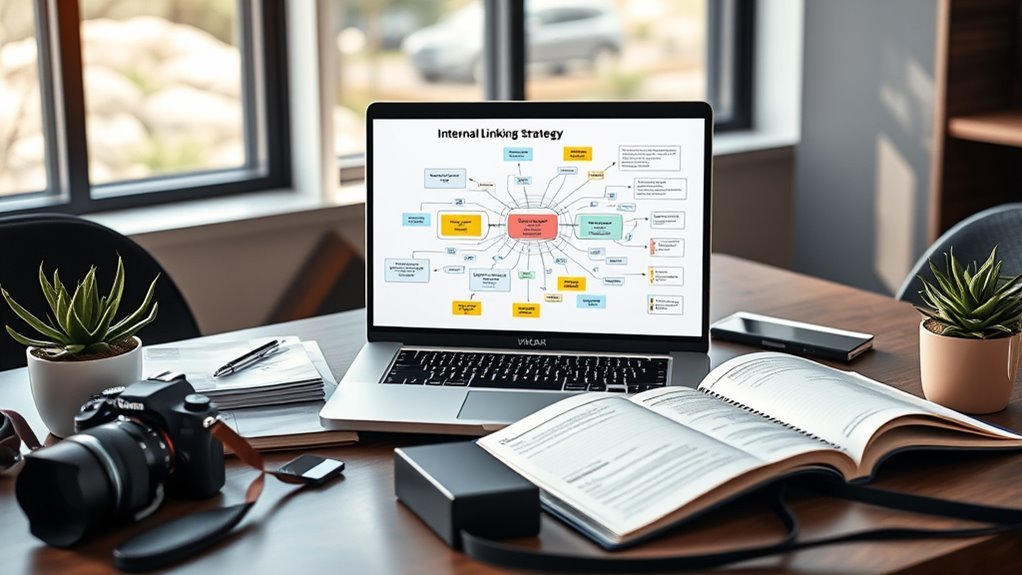
The Best Internal Linking Strategy for Affiliate Sites
The best internal linking strategy for affiliate sites involves identifying high-traffic pages and cornerstone content to enhance user experience and SEO. Organize your links hierarchically, focusing on relevant anchor text that resonates with your audience. Regularly monitor and adjust your links for effectiveness, ensuring you’re not overwhelming users. With a strategic approach, you can greatly boost traffic and conversions. Discover how to refine your strategy even further for ideal results.
Understanding the Importance of Internal Linking
While you might think of external backlinks as the primary drivers of traffic and authority, understanding the significance of internal linking can greatly enhance your affiliate site’s performance. Internal links create a web of connections within your site, guiding users seamlessly from one page to another. This not only improves user experience but also helps search engines crawl and index your content more effectively.
By strategically placing links, you amplify the linking benefits, directing traffic to your high-value pages. This guarantees that visitors engage more deeply with your content, increasing the chances of conversions and ultimately achieving that desired financial freedom.
Moreover, internal linking establishes a hierarchy, signaling to search engines which pages are most important. In a world where every click counts, mastering internal linking is an essential step toward optimizing your site’s performance and maximizing your affiliate marketing potential. Don’t underestimate its power—embrace it.
Identifying Key Pages for Linking
To optimize your internal linking strategy, you need to identify the key pages on your affiliate site that will maximize both user engagement and search engine visibility. Start with a thorough key page analysis, focusing on pages that generate the most traffic or conversions. These are your cornerstone content pieces—they’re where you’ll want to direct link value.
Assess the relevance of each page to your niche and guarantee they align with your audience’s interests. Use analytics tools to uncover which pages keep visitors engaged longer and lead to higher conversion rates. Prioritize linking to these high-value pages from other content throughout your site, creating a network that not only guides users but also enhances your SEO performance.
Creating a Logical Linking Structure
To create a successful internal linking structure, you need to organize your content hierarchically and guarantee that links are contextually relevant. This approach not only enhances user experience but also improves search engine visibility. By strategically linking related topics, you guide your audience through your site while boosting your affiliate conversions.
Hierarchical Content Organization
Creating a logical linking structure is essential for guiding users through your affiliate site and enhancing its overall performance. By adopting a hierarchical content organization, you can create a clear content hierarchy that simplifies structured navigation. Consider these three key points:
- Top-Level Categories: Start with broad topics relevant to your niche, providing a foundation for your content.
- Subcategories: Break down these categories into more specific subtopics, keeping user interests in mind.
- Individual Posts: Link to detailed articles within these subcategories, ensuring users find exactly what they need.
This strategy not only improves user experience but also boosts SEO, giving your audience the freedom to explore your site effortlessly while guiding them toward valuable conversions.
Contextual Link Relevance
While you might have a well-organized content structure, the effectiveness of your internal linking hinges on the relevance of those links within the context of your articles. To truly harness contextual keyword relevance, you should implement topic clustering strategies that connect related content seamlessly. This approach not only improves user experience but also enhances your site’s authority in search engines. By linking articles that share a common theme or topic, you create a logical flow that guides readers naturally through your site. Remember, every link should serve a purpose, enriching the reader’s journey and reinforcing your content’s value. Ultimately, a strategic linking structure can liberate your audience, helping them discover more of what they love without feeling lost.
Using Anchor Text Effectively
When it comes to anchor text, choosing relevant keywords is essential for both SEO and user experience. You should also diversify your anchor text types to avoid looking spammy and to enhance readability. By strategically implementing these tactics, you’ll not only improve your site’s authority but also guide your audience more effectively through your content.
Choosing Relevant Keywords
Effective anchor text is essential for enhancing your affiliate site’s internal linking strategy, as it not only guides users but also signals to search engines what your linked content is about. When choosing relevant keywords, focus on:
- Keyword Research: Identify terms that resonate with your audience and reflect your content’s intent.
- Long Tail Keywords: Utilize specific phrases that capture niche interests, increasing the chances of conversion.
- Contextual Relevance: Verify your anchor text aligns with the linked content to maintain coherence and boost SEO.
Diversifying Anchor Text Types
To maximize the impact of your internal linking strategy, it’s essential to diversify the types of anchor text you use. By incorporating anchor diversity, you create a more natural flow within your content, which can enhance user experience and improve SEO performance. Relying solely on exact-match anchors can limit your site’s potential and trigger algorithmic penalties. Instead, mix up your link variation; use branded, partial-match, and generic anchors to create a balanced approach. This not only helps search engines understand your site better but also keeps readers engaged, encouraging them to explore more. Ultimately, a well-rounded anchor text strategy can empower your affiliate site, providing the freedom to connect your audience with valuable resources seamlessly.
Monitoring and Adjusting Your Internal Links
Although internal linking may seem like a set-it-and-forget-it task, regularly monitoring and adjusting your links is essential for maximizing their effectiveness. By keeping an eye on link performance, you can uncover opportunities to enhance user experience and SEO. Here are three adjustment strategies to contemplate:
- Analyze Click-Through Rates: Regularly check which links are getting clicked and which aren’t. This data helps you prioritize higher-performing links.
- Update Outdated Content: Refresh links pointing to content that may no longer be relevant or accurate, ensuring users find the best information.
- Reassess Link Placement: Experiment with different placements of internal links to see where they drive the most traffic and engagement.
Common Mistakes to Avoid in Internal Linking
Even with a solid internal linking strategy in place, missteps can undermine your efforts. Avoid linking errors by not overwhelming your audience with excessive links; too many can dilute your message. Ignoring analytics is another pitfall—analyze which links drive traffic and which don’t. Neglecting updates can lead to broken links, creating a frustrating experience for users.
An inconsistent structure confuses both your audience and search engines. Steer clear of keyword stuffing, as it can harm your rankings and make your content feel forced. Irrelevant links not only frustrate users but also signal poor quality to search engines.
Lastly, watch out for over-optimization; balance is key. Under utilizing content can limit your site’s potential. By sidestepping these common mistakes, you can create a seamless internal linking experience that enhances user freedom and engagement.
Frequently Asked Questions
How Often Should I Update My Internal Links?
You should update your internal links as often as a chef perfects a recipe—frequently and with intention. Implementing a solid content update strategy is vital; aim for at least quarterly reviews to guarantee your internal link frequency aligns with your site’s evolution. This not only boosts SEO but also enhances user experience. By keeping your links fresh, you’re giving your audience a seamless journey, paving the way for their freedom to explore your content.
Can I Use Nofollow Tags on Internal Links?
Yes, you can use nofollow tags on internal links, but it’s important to weigh the nofollow benefits against potential SEO implications. While nofollow can help you control link equity and direct focus to specific pages, it may also hinder the crawling and indexing of those pages. If your goal is to maximize visibility and authority, consider strategically using nofollow tags, ensuring you maintain a balance that supports your site’s overall performance.
What Tools Can Help With Internal Linking Analysis?
For effective internal linking analysis, you’ll want to leverage SEO tools like Ahrefs, SEMrush, and Screaming Frog. These tools provide thorough link analysis, helping you uncover opportunities to optimize your internal structure. By analyzing your existing links, you can strategically enhance user experience and improve your site’s authority. Embrace these tools to gain freedom in your SEO strategy, allowing you to make informed decisions that drive traffic and boost conversions.
Does Internal Linking Affect Page Load Speed?
Yes, internal linking can affect page speed, but usually not markedly. While adding links does introduce extra HTTP requests, a well-structured internal linking strategy shouldn’t slow your site down considerably. Instead, focus on optimizing the number of links and ensuring they’re pointing to relevant, high-quality content. By doing so, you enhance user experience and maintain page speed, granting your audience the freedom to navigate your site effortlessly. Always prioritize performance!
How Many Internal Links Should I Include per Page?
Think of your page as a web, where each internal link is a strand connecting ideas. Aim for 3 to 5 internal links per page to maintain ideal linking density. Too many links can overwhelm users, negatively impacting their experience. You want to guide them smoothly through your content without clutter. Strategically placed links create a seamless journey, enhancing user engagement and keeping your audience free to explore without feeling lost.