
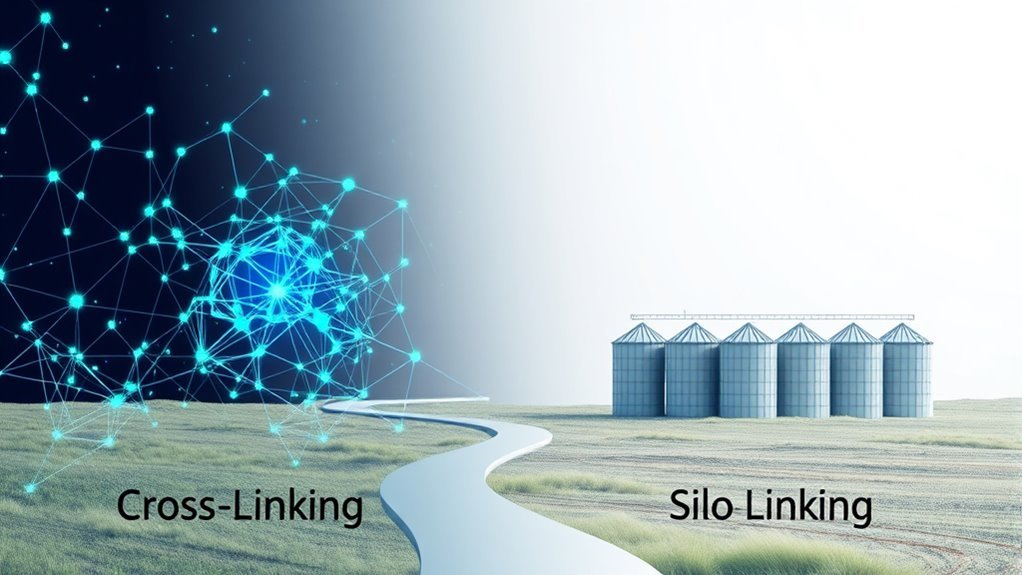
Cross-Linking Vs Silo Linking in WordPress
In WordPress, cross-linking connects related content, enhancing navigation and user engagement, while silo linking organizes content into themed categories for improved clarity and SEO. Cross-linking creates a web of links, encouraging exploration of various topics, whereas silo linking builds a clear hierarchy of information, boosting topical authority. Both strategies serve distinct purposes, contributing to your site’s effectiveness. By exploring further, you’ll discover ideal practices for implementing these techniques effectively.
Understanding Cross-Linking
Cross-linking is a powerful strategy in WordPress that can considerably enhance your site’s SEO and user experience. By implementing effective linking strategies, you not only improve navigation but also signal to search engines the relevance of your content. Start by identifying related posts or pages within your site. This creates a web of connections, guiding users seamlessly through your content.
When you develop your cross-linking strategies, focus on using descriptive anchor text that accurately reflects the linked content. This not only aids users in understanding where they’re headed but also boosts your SEO by reinforcing keyword relevance. Regularly auditing your links helps maintain their effectiveness, ensuring they remain relevant over time.
Ultimately, the goal is to create a cohesive, engaging environment for visitors, empowering them to explore freely while enhancing your site’s authority in the eyes of search engines.
Understanding Silo Linking
When you implement silo linking, you’re strategically organizing your content to enhance user experience and SEO. This structure not only clarifies the relationship between topics but also boosts your site’s authority in specific areas. By prioritizing content organization, you can markedly improve navigation and retention on your WordPress site.
Silo Structure Benefits
A well-structured silo can greatly enhance your WordPress site’s SEO and user experience. By implementing silo organization, you create a clear hierarchy that improves thematic relevance. This strategic layout helps search engines understand your content better, leading to higher rankings and increased organic traffic.
Here’s a quick overview of silo structure benefits:
| Benefit | Description | Emotional Impact |
|---|---|---|
| Improved SEO | Higher search engine visibility | Freedom to reach your audience |
| Enhanced Navigation | Easier for users to find related content | Comfort in user experience |
| Increased Engagement | Keeps visitors on your site longer | Connection with your audience |
Content Organization Importance
Understanding the importance of content organization is crucial for maximizing the effectiveness of your silo linking strategy. A well-defined content hierarchy allows you to structure your site so that users and search engines can easily navigate and comprehend your topics. By grouping related content together, you enhance topic relevance, making it easier for visitors to find what they’re looking for and for search engines to rank your pages appropriately. This strategic organization not only keeps your audience engaged but also reinforces your authority on specific subjects. When you prioritize content organization, you’re empowering your site’s potential, giving users the freedom to explore while ensuring they receive coherent, valuable information aligned with their interests.
Benefits of Cross-Linking
Cross-linking offers significant advantages for your website, particularly in enhancing user navigation and improving SEO performance. By strategically linking related content, you guide visitors through your site more effectively, keeping them engaged longer. Additionally, search engines favor interconnected content, which can boost your site’s visibility and ranking.
Enhanced Navigation Experience
While many website owners focus on content quality, the navigation experience greatly influences user engagement and retention. Cross-linking enhances the user journey by creating a seamless path through your content. When users can easily explore related articles, they’re more likely to stay on your site longer, deepening their connection with your brand. This interconnectedness not only improves user experience but also empowers visitors to navigate freely, discovering valuable insights without feeling lost. By strategically placing links within your content, you guide users to relevant topics, making their exploration efficient and enjoyable. Ultimately, this enhanced navigation experience fosters loyalty, encouraging repeat visits and word-of-mouth referrals as users appreciate the ease with which they can find information that resonates with them.
Improved SEO Performance
When you implement cross-linking effectively, it not only enriches the user experience but also greatly boosts your site’s SEO performance. By strategically linking relevant pages, you’re enhancing keyword targeting, which helps search engines understand your content’s context. This creates a cohesive narrative throughout your site, making it easier for users to navigate and discover more of your work. Additionally, cross-linking contributes to your backlink strategy, as it encourages other sites to link to your content when they find it interconnected and valuable. The result? Improved domain authority and higher search rankings. Embracing cross-linking not only empowers your content but also liberates your site from the confines of silo linking, offering a more dynamic and engaging online presence.
Benefits of Silo Linking
Silo linking offers a structured approach to organizing content on your WordPress site, enhancing both user experience and search engine optimization. By implementing effective siloing strategies, you create distinct categories that make navigation intuitive for users. This clarity not only keeps visitors engaged but also encourages them to explore more of your content.
Moreover, silo linking strengthens your site’s topical authority in the eyes of search engines. When you group related content, it signals to search engines that your site is a valuable resource on those topics, potentially boosting your rankings. Additionally, it helps distribute link equity more efficiently, ensuring that your most important pages receive the attention they deserve.
Key Differences Between Cross-Linking and Silo Linking
Understanding the nuances between silo linking and cross-linking can considerably impact your content strategy. While both methods enhance navigation and SEO, they serve distinct purposes.
- Silo Linking Techniques: Organize content into themed categories for better user experience.
- Cross Linking Strategies: Connect related content across different categories to boost engagement.
- Structure: Silo linking creates a hierarchical structure, whereas cross-linking offers a more web-like approach.
- SEO Benefits: Silo linking strengthens topical authority, while cross-linking enhances overall site connectivity.
- User Journey: Silo linking guides users through a focused path, while cross-linking encourages exploration.
When to Use Cross-Linking
Cross-linking can be an invaluable strategy in several scenarios, particularly when you aim to enhance user engagement and improve SEO. You should consider using cross-linking when creating content that shares a common theme or subject matter, as this establishes contextual relevance. By linking related articles, you guide your audience through a cohesive narrative, encouraging them to explore more of your site.
Strategic placement of links is essential; you want them to feel natural and beneficial, not forced. For instance, if you mention a topic that’s covered in-depth in another post, linking to it provides value to your readers. Additionally, cross-linking can improve your site’s authority, as search engines recognize the connections between your content.
Ultimately, when you prioritize user experience and relevant connections, cross-linking becomes a powerful tool in your content strategy, fostering a network of information that resonates with your audience.
When to Use Silo Linking
When organizing content for your WordPress site, silo linking serves as a strategic framework to enhance both user experience and search engine optimization. You should consider employing silo linking strategies when you want to create a clear and logical structure for your content. This approach is particularly effective in the following scenarios:
- Your site covers multiple topics that need distinct organization.
- You aim to improve navigation for users seeking specific information.
- You’re optimizing for search engines to boost rankings.
- You want to increase the relevancy of your content clusters.
- You have a long-term content plan that requires cohesive themes.
Implementing effective content organization through silo linking not only clarifies your site’s layout but also aids visitors in finding related information effortlessly. By focusing on these aspects, you empower both users and search engines to engage with your content more effectively.
Best Practices for Implementing Cross-Linking
To maximize the effectiveness of cross-linking on your WordPress site, it is essential to adopt a strategic approach that considers both user experience and SEO benefits. Focus on internal linking that enhances content relevance and boosts user engagement. Here are some best practices:
| Best Practices | Description |
|---|---|
| Keyword Strategy | Integrate keywords naturally within links. |
| Linking Hierarchy | Prioritize links from high-authority pages. |
| Contextual Links | Use relevant links that provide value to users. |
| Site Architecture | Guarantee a logical layout for easy content discovery. |
Best Practices for Implementing Silo Linking
While many webmasters focus on the aesthetics of their sites, implementing a robust silo linking structure is critical for enhancing both usability and SEO performance. A well-thought-out silo strategy not only helps organize your content hierarchy but also aids search engines in understanding your site’s structure.
To effectively implement silo linking, consider these best practices:
- Define your main topics: Identify core themes for your silos.
- Create subcategories: Break down each main topic into relevant subtopics.
- Use internal links wisely: Link related content within the same silo to strengthen connections.
- Maintain a logical flow: Confirm users can easily navigate through silos without confusion.
- Regularly update content: Keep your silos fresh and relevant to retain user interest.
Frequently Asked Questions
Can Cross-Linking Improve My Site’s SEO Ranking?
Cross-linking can boost your site’s SEO ranking like a well-tuned engine powering a high-speed car. By strategically implementing cross links, you’re enhancing navigation and allowing search engines to crawl your content more efficiently. The cross link benefits include increased page authority and improved user engagement, both essential SEO strategies. With a thoughtful approach, you can create a web of interconnected content that not only elevates your rankings but also offers freedom of exploration for your audience.
How Does Silo Linking Affect User Navigation?
Silo linking greatly enhances user experience by improving navigation flow. When you structure content in themed categories, it allows users to find related information effortlessly. This logical organization helps them explore your site without confusion, leading to longer visits and lower bounce rates. By guiding users through a clear path, you’re not just enhancing their journey but also encouraging deeper engagement with your content, ultimately fostering a sense of freedom in their exploration.
Is It Possible to Combine Both Linking Strategies?
Yes, it’s definitely possible to combine both linking strategies. By using hybrid strategies, you can maximize the linking benefits of each approach. This means you can enhance user navigation while maintaining a clear site structure. For instance, you might create silos for organization but cross-link within those silos to encourage exploration. This balance not only improves SEO but also gives users the freedom to discover related content effortlessly, enriching their overall experience.
What Tools Assist in Implementing Cross-Linking?
When it comes to implementing cross-linking, several tools can really enhance your strategy. Linking plugins like Link Whisper or Yoast SEO help automate and optimize your internal linking efforts. Additionally, using SEO tools such as Ahrefs or SEMrush allows you to analyze your website structure and identify linking opportunities. By leveraging these tools, you can create a more interconnected site, improving user experience and boosting your search engine rankings while enjoying the freedom of a well-organized site.
Are There Any Risks With Silo Linking?
Yes, there are risks with silo linking. While a silo structure can enhance organization and SEO, potential pitfalls include over-optimization and restricting content flow. If you’re too rigid, it might limit user navigation and engagement, making it harder for visitors to discover related topics. Additionally, if you don’t update your silos regularly, they can become outdated, negatively impacting your site’s relevance and authority in search engines. Balancing structure and flexibility is key for success.