How to Build Internal Links Without Plugins
To build internal links without plugins, start by analyzing your existing content to identify high-value pages. Create a clear link structure plan that categorizes content logically and uses descriptive anchor text. Focus on linking related articles together to enhance user experience and guide navigation. Prioritize linking to your most valuable pages based on performance metrics. Regularly monitor and update your internal links to maintain relevance and optimize user flow. There’s more to explore on structuring your links effectively.
Understanding the Importance of Internal Linking
While many website owners focus on external links to boost their search engine rankings, understanding the importance of internal linking is equally essential. A solid linking strategy can greatly enhance your site’s SEO performance by establishing a clear content hierarchy. When you link related pages within your site, you’re not only guiding users through relevant content but also helping search engines understand the structure of your website. This clarity can lead to improved indexing and higher visibility.
Analyzing Your Existing Content
To effectively build internal links, you first need to assess your existing content. Start by identifying relevant articles that can support each other, then use Google Search to uncover hidden gems. Finally, evaluate content performance to guarantee your linking strategy enhances user engagement and SEO.
Identify Relevant Content
Identifying relevant content is essential for effective internal linking. Start by analyzing your existing content and categorize it based on themes or topics. This content categorization helps you visualize connections between your articles. Look for keyword relevance within each piece; this guarantees that your links enhance the reader’s journey while boosting your SEO. Consider which articles naturally complement each other and provide additional insights. By strategically linking related content, you not only improve user experience but also enable search engines to understand your site’s structure better. Remember, the goal is to create a web of interconnected knowledge that empowers your audience to explore freely. Leverage this internal linking strategy to increase engagement and visibility without reliance on plugins.
Use Google Search
Analyzing your existing content through Google Search can reveal valuable insights for enhancing your internal linking strategy. By employing effective Google search strategies, you can identify which keywords drive traffic to your site. Start by searching for your primary keywords and examining the results. This helps you discover related content that you might not have linked before. Focus on keyword optimization by ensuring that your internal links utilize these high-traffic keywords, enhancing both user experience and SEO. Look for opportunities to connect older posts with newer content, creating a seamless flow of information. This method not only boosts visibility but also empowers readers to navigate freely through your site, enriching their overall experience.
Assess Content Performance
While you may have a wealth of content on your site, evaluating its performance is essential for optimizing your internal linking strategy. A thorough performance analysis helps you identify which pieces resonate with your audience and which don’t. Focus on these content metrics:
- Page Views: Assess which articles attract the most traffic.
- Bounce Rate: Identify content that keeps visitors engaged versus those that don’t.
- Time on Page: Determine which pieces captivate your audience’s attention.
- Conversion Rate: Analyze how well your content drives desired actions.
Creating a Link Structure Plan
To build an effective internal linking strategy, you need a clear link structure plan that guides how your pages interconnect. Start by establishing a link hierarchy, which prioritizes your most important pages. This guarantees that visitors and search engines can easily navigate your site. Next, focus on content categorization. Group related topics together to create a logical flow, making it simpler for users to find relevant information.
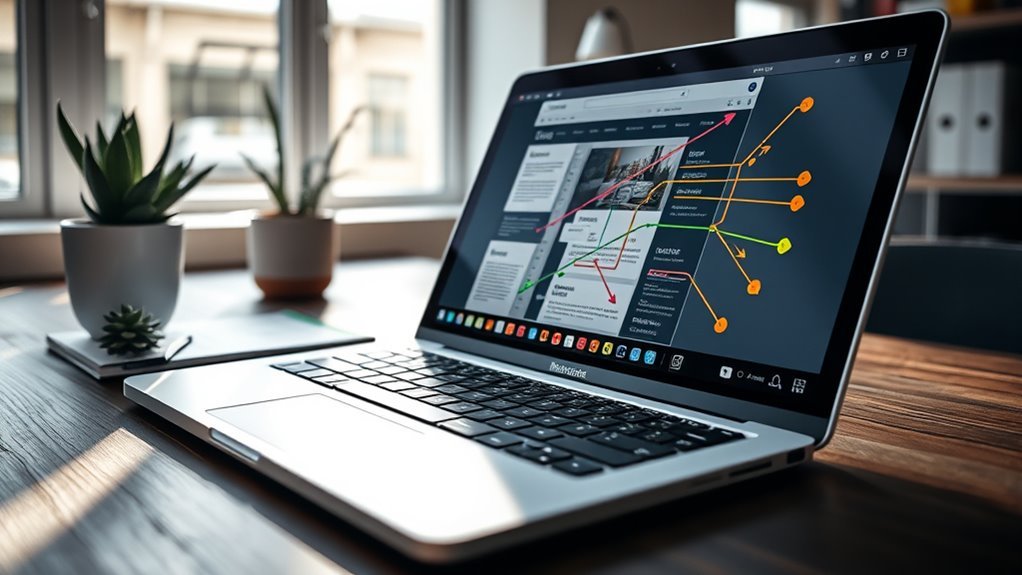
Map out your key pages and their relationships, identifying which pages should link to one another. Consider using a visual tool or spreadsheet for clarity. Aim for a balance between depth and breadth: link deeply to important content while also providing broader connections across categories. This strategic approach not only enhances user experience but also optimizes your site for search engines, giving you the freedom to expand your content without compromising structure.
Utilizing Descriptive Anchor Text
Descriptive anchor text plays an essential role in enhancing both user experience and SEO. When you use effective anchor text strategies, you’re not just guiding readers; you’re also signaling search engines about the content’s relevance. Here’s how to maximize your anchor text:
- Be Specific: Use descriptive phrases that clearly indicate what the linked content is about.
- Incorporate Keywords: Confirm your anchor text is relevant to the keywords of the linked page, boosting both SEO and user understanding.
- Limit Length: Keep it concise; typically, 2-5 words work best for clarity.
- Avoid Generic Terms: Stay away from vague phrases like “click here,” as they don’t convey useful information.
Linking Related Articles Together
When linking related articles, you should start by identifying content that complements each other. Using descriptive anchor text not only enhances user experience but also signals relevance to search engines. Finally, maintaining a logical structure in your links helps users navigate seamlessly and boosts your site’s overall authority.
Identify Relevant Content
Identifying relevant content is essential for creating effective internal links that enhance user experience and improve SEO. By focusing on content themes and keyword relevance, you can strategically connect your articles and guide your audience through related subjects. Here are four steps to help you identify relevant content:
- Analyze existing articles: Look for topics that share common themes or keywords.
- Utilize keyword research tools: Find related keywords that can lead you to complementary content.
- Engage with your audience: Take note of what questions or interests they frequently express.
- Review site analytics: Identify which articles attract the most traffic and consider linking to them.
Use Descriptive Anchor Text
Linking related articles together not only enhances user navigation but also strengthens the overall structure of your website. One effective approach is using descriptive anchor text. This means choosing phrases that clearly indicate the content of the linked article. By implementing targeted anchor text strategies, you provide context that helps both users and search engines understand the relationship between topics. Contextual relevance is vital; it guides your audience seamlessly through related content, enhancing their experience and keeping them engaged longer. Avoid vague terms like “click here” and opt for specific phrases that reflect the linked article’s value. This strategic method not only boosts your SEO but also empowers users to navigate your site with confidence and clarity.
Maintain Logical Structure
To effectively maintain a logical structure in your internal linking strategy, it’s crucial to connect related articles in a way that reflects their thematic relationships. This creates a clear link hierarchy that enhances user experience and search engine optimization. Here are some strategies to take into account:
- Identify Content Categories: Group articles by themes or subjects to establish a coherent structure.
- Link to Relevant Articles: Always connect to pieces that provide additional value or context to the reader.
- Create a Content Pathway: Guide your audience through related topics, encouraging deeper engagement with your site.
- Review and Update Links: Regularly assess your links to verify they still align with your content categories and maintain relevance.
Prioritizing High-Value Pages
When you prioritize high-value pages, you’re not just enhancing your site’s structure; you’re also guiding both users and search engines to your most significant content. Focus on pages that generate high traffic and align with your content hierarchy. Identify these high-value pages based on metrics like page views, conversion rates, and engagement levels.
By linking to these pages from various parts of your site, you create a robust internal linking strategy that not only boosts their visibility but also improves user experience. It helps visitors find essential information quickly, fostering a sense of freedom in navigation.
Moreover, strategically placed links can elevate these pages in search engine rankings, making them even more accessible. As you build your internal links, remember that an effective content hierarchy is vital; it allows you to channel your audience’s attention where it matters most, ensuring they discover your best content effortlessly.
Monitoring and Updating Internal Links
While establishing internal links is essential, it’s equally important to regularly monitor and update them to maintain their effectiveness. Doing so guarantees your content stays relevant and accessible. Here are some strategic steps to follow:
- Conduct Regular Link Audits: Schedule routine checks to identify broken links or outdated references.
- Review Content Updates: Whenever you refresh your content, adjust internal links to connect to newer, relevant pages.
- Analyze Traffic Patterns: Use analytics tools to see which pages receive the most visits, and adjust links accordingly to optimize user flow.
- Keep an Eye on SEO Trends: Stay informed about evolving SEO practices and adjust your internal linking strategy to align with them.
Enhancing User Experience Through Navigation
Effective navigation is essential for enhancing user experience, as it allows visitors to find information quickly and intuitively. By optimizing your user interface, you create clear user pathways that guide users to relevant content without confusion. Think about how your links are structured; internal links should be strategically placed within your content to direct users seamlessly from one topic to another.
Consider using descriptive anchor text that communicates what users can expect when they click a link. This transparency fosters trust and encourages exploration. Additionally, guarantee your navigation menu is straightforward and logically organized, reducing cognitive load on visitors.
Frequently Asked Questions
Can Internal Links Improve SEO Rankings?
Yes, internal links can definitely improve your SEO rankings. By establishing a strategic link structure, you help search engines understand your site’s hierarchy and content relevance. Using descriptive anchor text enhances user experience and encourages deeper navigation. The more valuable connections you create, the more authority your pages gain. This not only boosts visibility but also allows you to maintain control over your site’s flow, giving you the freedom to guide visitors effectively.
How Often Should I Update Internal Links?
You should update internal links regularly, ideally every few months. This link updating frequency helps guarantee that your content remains fresh and pertinent. As you create new content or identify outdated links, adjust them to maintain link relevance importance. By strategically revitalizing your internal links, you enhance user experience and improve SEO. Staying proactive with your links can free you from the pitfalls of broken links and irrelevant content.
What Is the Ideal Number of Internal Links per Page?
There’s no strict ideal number of internal links per page, but generally, 3 to 5 links is a solid range. This allows for effective internal linking strategies without overwhelming your readers. Best linking practices suggest focusing on relevance and context, ensuring each link adds value. Prioritize quality over quantity, maintaining a natural flow. By strategically embedding links, you enhance user experience, guiding visitors through your content while boosting SEO.
Are There Risks to Excessive Internal Linking?
Yes, there are risks to excessive internal linking. A poor linking strategy can overwhelm users, detracting from their experience as they may struggle to navigate your content. Too many links can dilute the value of each, confusing search engines about your content’s hierarchy. To strike a balance, focus on quality over quantity, ensuring each link adds value and enhances user experience, rather than creating unnecessary clutter in your web pages.
Can Internal Links Enhance Content Readability?
Yes, internal links can greatly enhance content readability. By creating a structured flow, you improve enhanced navigation for your readers, allowing them to easily find related information. This strategic linking not only boosts user engagement but also keeps visitors on your site longer. When you thoughtfully place internal links, you guide your audience through a seamless journey, empowering them to explore more without feeling lost. It’s all about enhancing their experience.